From Enhanced Infectiousness to Enhanced Virulence: Why a Glycosylation-Driven Shift in SARS-CoV-2 Evolution Has Become Increasingly Likely
Overview
This article explains a theory about how SARS-CoV-2 (the virus that causes COVID-19) may continue to evolve under strong immune pressure created by mass vaccination during an ongoing pandemic. The author argues that the virus has already passed through several evolutionary stages and may be approaching a final stage in which it becomes more harmful (more virulent) by changing the way sugar molecules coat its spike protein.
The central idea is this:
When a virus is repeatedly blocked in its usual ways of infecting and spreading, it may be forced to adopt a more damaging strategy just to survive.
Background and Correction of Earlier Predictions
In earlier work, the author predicted that SARS-CoV-2 would evolve toward high virulence because of changes in how antibodies bind to the virus’s spike protein—specifically through changes in glycosylation, which is the addition of sugar molecules to the spike.
The mechanism described earlier (how glycosylation could increase virulence) is still considered valid by the author. However, the source of immune pressure driving this change was misidentified.
Originally, the author believed that:
- Non-neutralizing antibodies (NNAbs) were the main force pushing the virus toward higher virulence.
Now, the author argues that:
- NNAbs do not exert strong evolutionary pressure because they do not kill infected cells or stop transmission.
- Instead, the dominant immune pressure now comes from cytotoxic T cells, especially memory CD4+ T cells that kill virus-loaded immune cells in the upper respiratory tract.
Key Immune Players (Explained Simply)
- Neutralizing antibodies (NAbs): Antibodies that block the virus from entering cells.
- Non-neutralizing antibodies (NNAbs): Antibodies that bind the virus but do not stop infection.
- Dendritic cells (DCs): Immune cells in the nose and airways that can carry virus particles and pass them to other cells.
- Trans-infection: When DCs pass virus particles to other cells.
- Trans-fusion: When infected cells fuse with neighboring cells, spreading the virus directly.
- Cytotoxic CD4+ T cells: T cells that kill infected immune cells, not just infected tissue cells.
Why Immune Pressure Has Changed
As people experienced repeated infections after vaccination (called vaccine breakthrough infections, or VBTIs), the immune system increasingly relied on:
- Broad, poorly neutralizing antibodies
- Memory T cells recalled over and over again
Over time, some CD4+ T helper cells turned into killer (cytotoxic) CD4+ memory T cells. These cells:
- Kill dendritic cells that are carrying virus particles
- Reduce viral replication in the upper respiratory tract
- Shorten the time the virus can be transmitted
This creates strong pressure on the virus’s ability to spread, not just its ability to infect cells.
Why This Pressure Is Different
This T-cell-driven pressure:
- Is not specific to one viral mutation
- Cannot be escaped by changing a single epitope
- Forces the virus to change its overall behavior, not just its sequence
As a result, the virus is no longer mainly evolving to:
- Enter cells better
Instead, it is evolving to:
- Spread despite immune cells destroying virus-carrying immune cells
The Four Evolutionary Phases (Simplified)
Phase 1: Becoming Easier to Catch (Higher Infectiousness)
Early vaccines were based on the original Wuhan spike protein, which no longer matched circulating variants.
As a result:
- Antibodies slowed infection but didn’t stop it
- Variants that entered cells more easily were favored
- This led to Omicron, which:
- Spread very efficiently
- Caused less severe disease in vaccinated people due to immune interference with virulence mechanisms
Phase 2: Becoming Better at Spreading (Higher Transmissibility)
As vaccination and reinfections continued:
- Adaptive immunity deepened
- Innate immune training was reduced in vaccinated people
- Repeated VBTIs triggered strong memory T-cell responses
Cytotoxic CD4+ T cells began killing virus-carrying dendritic cells in the nose and throat.
This:
- Reduced viral load
- Shortened infectious periods
- Pressured the virus to find new ways to spread
Phase 3: Running Out of Mutational Space
New variants like BA.3.2.2 show:
- Large deletions and mutations
- Faster cell-to-cell spread
- More efficient fusion
But:
- These changes give only small transmission advantages
- The spike protein is reaching structural limits
- More mutations start to damage stability and function
This suggests the virus is near exhaustion of simple mutation-based solutions.
Why Small Changes Are No Longer Enough
At this stage:
- Minor spike mutations don’t significantly increase spread
- Non-spike genes cannot overcome immune pressure
- Intracellular immune evasion strategies are ineffective against rapid T-cell killing
In short:
The virus is boxed in evolutionarily.
Phase 4: Glycosylation as the Final Escape Route
The author argues that the only remaining high-impact option is major restructuring of spike glycosylation.
What Glycosylation Does (Simply)
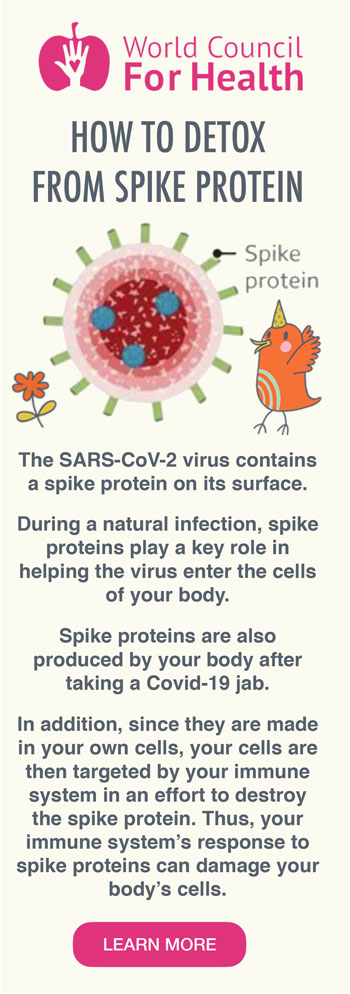
- Sugar molecules coat the spike protein
- These sugars can:
- Hide antibody binding sites
- Change how the virus attaches to immune cells
- Alter how the virus spreads between cells
Crucially:
- Glycosylation can change viral behavior without changing the protein backbone
- This avoids the structural limits of further mutations
What a Glycosylation Shift Could Enable
A heavily glycosylated spike could:
- Prevent NNAbs from blocking trans-infection
- Restore and enhance cell-to-cell spread
- Enable large syncytia (fused infected cells)
- Bypass antigen presentation
- Evade cytotoxic T-cell recognition
This would:
- Allow rapid viral spread inside tissues
- Reduce immune detection
- Increase tissue damage
These are classic features of high virulence.
The Proposed Outcome: “HI-VI-CRON”
The author uses the term HI-VI-CRON to describe a hypothetical Omicron descendant that:
- Is far more virulent in highly vaccinated populations
- May appear mild or limited in unvaccinated individuals due to different immune dynamics
- Could evade standard antibody surveillance
Why This Matters Now
Current trends—lower hospitalizations, fewer acute cases, slower variant spread—are interpreted by authorities as signs of endemicity.
The author argues instead that these are signs of:
- Extreme immune pressure
- Viral constraint
- An approaching evolutionary tipping point
Final Takeaway
According to this theory:
- SARS-CoV-2 has been forced step by step into a corner
- It can no longer evolve safely through simple mutations
- A major shift in spike glycosylation may be its last viable option
- That shift could dramatically increase harm, not by intention, but by necessity
1. Why wastewater data looks “quiet” — and why the author says that’s misleading
The author says that recent COVID activity in wastewater looks lower than during earlier waves. Public health authorities interpret this as a sign that COVID is mostly over and has become “endemic.”
However, the author argues this is a mistake. He claims the lower wastewater signal is not because the virus is harmless or disappearing, but because:
- The virus’s ability to spread between people has stalled, not vanished.
- The virus is now under strong immune pressure, especially in heavily vaccinated populations.
- As a result, viral evolution has slowed and become harder to see.
So, according to this view, COVID hasn’t ended — it has entered a quiet but unstable phase.
2. Why new variants seem weak and slow-moving
New variants (like BA.3.2.2 and related sub-lineages) are spreading very slowly and don’t seem to be replacing other variants quickly.
The author argues this happens because:
- The virus has already used up most of the “easy” mutations that increase spread.
- Further mutations that improve transmission now come with biological costs that hurt the virus in other ways.
- This creates an evolutionary “traffic jam” where many slightly different variants circulate at low levels, but none clearly dominate.
This makes it look like viral evolution has stalled — but the author claims that pressure is still building beneath the surface.
3. Why surveillance systems are “blind” (according to the author)
Current surveillance focuses on:
- Which variant is dominant
- How fast it spreads
- Whether it causes more hospitalizations or deaths
The author argues this approach misses what actually matters now:
- How hard the virus is being pushed by population-level immunity
- The slow accumulation of many low-level variants, instead of one fast-growing one
Because of this, public health agencies mistakenly conclude:
- The virus is weakening
- Vaccines are still fully protective
- Surveillance can be reduced
The author believes this creates a dangerous blind spot.
4. The author’s core claim: immune pressure is driving the virus toward a different strategy
The author argues that repeated vaccination plus repeated infections create strong but imperfect immune pressure.
He stresses this is not the same as herd immunity:
- Herd immunity stops transmission and ends viral evolution
- Suboptimal immunity lets the virus keep spreading and forces it to adapt
According to the author, the virus may soon hit a limit where:
- It can’t gain much more transmissibility through normal mutations
- Small gains no longer help it survive immune pressure
At that point, he suggests the virus could make a radical evolutionary jump instead of gradual change.
5. What the author means by a “glycosylation shift”
This is the central idea of the article.
In simple terms:
- The virus may change how sugar molecules coat its spike protein
- These sugar changes don’t necessarily show up clearly in genetic sequencing
- They can hide the virus from antibodies or change how it infects cells
The author claims this could:
- Reduce infection in unvaccinated people
- Increase severe disease in heavily vaccinated people
- Make the virus more dangerous without obvious early warning signs
This hypothetical virus is what the author calls “HIVICRON” (his term, not an official one).
6. Why this shift would look sudden and “out of nowhere”
The author says such a change would appear shocking because:
- Genomic surveillance wouldn’t see it early
- Antibody tests wouldn’t detect the problem
- Epidemiological models aren’t built for this scenario
So when severe disease suddenly spikes, it would look random — even though the author argues it was slowly building all along.
7. Why the author thinks lockdowns, antivirals, and vaccines wouldn’t stop it
In this scenario, the author claims:
- The virus would spread cell-to-cell instead of virus-to-cell
- That would bypass antibodies and many antivirals
- Lockdowns wouldn’t stop damage happening inside already-infected people
He believes intervention would come too late.
8. Why the author believes unvaccinated people would be safer
The author argues (controversially) that:
- Unvaccinated people tend to have lower long-term anti-spike antibody levels
- Their immune systems rely more on innate and cellular immunity
- This, he claims, avoids immune mis-training and antibody-driven enhancement
Because of this, he predicts unvaccinated individuals would largely be protected from this hypothetical future virus.
9. His final warning
The author concludes that:
- Public health authorities are misreading the situation
- They are over-confident in vaccines
- They are ignoring evolutionary pressure caused by mass vaccination during an active pandemic
He warns that:
- A sudden shift to a more dangerous form of the virus could occur
- It would hit highly vaccinated countries first
- It would appear abrupt, unexpected, and devastating
Recap and Summary
Recent analysis suggests that while current COVID variants are highly infectious, they remain relatively mild, which has led many health authorities to assume the pandemic is over. However, repeated vaccination and breakthrough infections in highly vaccinated populations are putting unusual immune pressure on the virus. This could push SARS-CoV-2 toward a sudden evolutionary shift—through changes in its spike protein glycosylation—that makes it more virulent, especially in vaccinated individuals, while leaving unvaccinated people largely protected.
Because this shift wouldn’t show up clearly in standard genomic or antibody surveillance, it could appear to emerge suddenly, catching public health systems off guard. Experts warn that current monitoring methods may underestimate the true risk, and that proactive antiviral strategies may be needed to prevent a sudden wave of highly severe disease.
Source:

Recommended for you